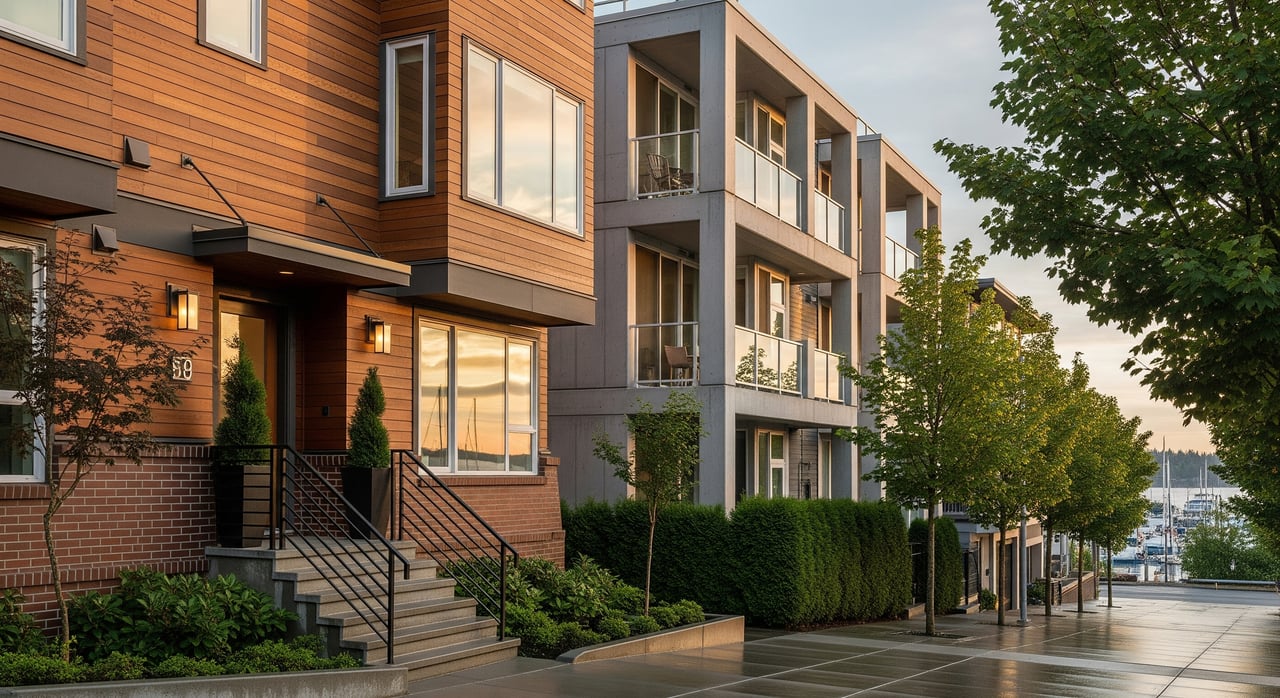
Trying to decide between a townhome or a condo in Ballard? You are not alone. With lively streets near NW Market St and quieter residential blocks around 24th Ave NW, it can be hard to know which home type fits your lifestyle, budget, and long‑term plans. In this guide, you will learn the key differences in ownership, HOA dues, parking, outdoor space, financing, and resale so you can choose with confidence. Let’s dive in.
Ballard housing at a glance
Ballard offers a mix of low‑ to mid‑rise buildings and attached rowhomes, all within a highly walkable neighborhood. Along NW Market St and Ballard Ave NW, you will see more condominiums in mixed‑use buildings with retail at street level. On and around 24th Ave NW and nearby residential blocks, you will find more low‑rise townhome and rowhouse developments, often with private entries, small yards or rooftop decks, and garages.
If you want a walk‑to‑everything lifestyle, condos near Market St can be compelling. If you want more private outdoor space or dedicated parking, townhomes on residential streets may be a better fit. New construction has added both product types, and inventory shifts with ongoing infill, so always check current listings before you tour.
What you own: condo vs townhome
Understanding the legal form matters more than the building’s look. A townhome can be legally a condominium or fee‑simple. The difference affects financing, insurance, and maintenance.
- Condominium: You own the interior airspace of your unit plus an undivided interest in the common elements. A condominium association governs the project. You pay monthly dues that fund building insurance, maintenance, common utilities, and reserves.
- Fee‑simple townhome: You own the home and the land beneath it, subject to CC&Rs and an HOA if one exists. You are usually responsible for your exterior, roof, and yard, though shared walls and easements are common.
- Condo‑title townhome: Some townhomes are legally condos even though they look like fee‑simple rowhouses. Treat these like condominiums for financing, insurance, and HOA responsibilities.
Before you write an offer, confirm the legal form, ask for CC&Rs and bylaws, and review the condominium declaration if applicable.
Financing differences you should know
Many lenders underwrite fee‑simple townhomes like single‑family homes. Condominiums involve project‑level review, including financials and legal status. If you plan to use FHA or VA financing, you must confirm whether the condo project is approved. Not every building is eligible, which can limit loan options and affect your timeline.
Even with conventional loans, a condo’s budget, reserves, and litigation history can influence lender approval. This is one reason it helps to clarify ownership form early in your search.
Insurance and maintenance responsibilities
Condos usually carry a master insurance policy covering common elements and often the building exterior. You will carry an HO‑6 policy for your unit’s interior finishes, personal property, and liability. The scope of the master policy matters. “Bare‑walls” coverage is different from “all‑in,” and the master deductible can be high.
Fee‑simple townhomes typically require HO‑3 or HO‑5 homeowner policies that cover the structure and land you own. You may be responsible for the exterior, roof, and landscaping, subject to any shared wall or common area agreements. Always verify party‑wall agreements and easements during due diligence.
HOA dues and what drives them
Condo dues tend to be higher because they fund exterior maintenance, building systems, master insurance, reserves, and sometimes common utilities like water or heat. Elevators, garages, and complex plumbing or heating systems are large cost drivers. Adequate reserves reduce the risk of special assessments.
Townhome HOA dues vary widely. In many Ballard rowhome communities, dues are lower because they cover fewer shared services, such as landscaping, private drive maintenance, or snow removal. Newer luxury townhome clusters with shared amenities can have higher dues. Always read the budget and reserve study, and scan recent minutes for planned projects.
Parking, storage, and outdoor space in Ballard
Parking is a major differentiator in Ballard. Some older condos and infill units offer no dedicated stall, or a single compact stall. Townhomes are more likely to include a private garage or driveway. If you rely on street parking, check the specific block’s rules, including any Residential Parking Zone requirements.
Storage also differs. Condos often provide assigned storage cages or rooms, and sometimes bicycle storage. Townhomes commonly include garage storage, under‑stair closets, or small basements.
For outdoor space, condos usually offer balconies, shared courtyards, or building rooftop decks. Townhomes often provide private patios, small yards, or rooftop decks that support gardening and entertaining.
Resale factors and risks in Ballard
Condos near the Market St corridor tend to attract buyers who prioritize walkability and urban amenities. These homes often see steady turnover due to lifestyle and rental demand. Townhomes on or near 24th Ave NW appeal to buyers who want more space, a private entry, and parking, and they often attract move‑up buyers.
When you think about resale, focus on project health and buyer pool. Key risks to review include:
- HOA litigation or pending claims that can limit financing and reduce the buyer pool.
- Special assessments or deferred maintenance. Review reserve studies and recent capital projects, including roof, siding, windows, or plumbing.
- Rental restrictions and owner‑occupancy rules. These influence investor demand and may affect financing.
- Occupancy mix. A higher share of rentals can affect some loan programs and long‑term appreciation dynamics.
Local factors can also shape value over time. Planned transit improvements can boost demand near key routes. Parts of Ballard sit near low‑lying shoreline; check flood and hazard maps for any property near the waterfront or Ballard Locks. Changes to curb policies or new RPZ areas can affect desirability if you depend on street parking.
Quick decision guide: which fits you?
Choose a Ballard condo if you want:
- A walkable lifestyle near NW Market St or Ballard Ave NW, with shops and restaurants close by.
- Lower day‑to‑day maintenance and building management through an association.
- Community amenities like a lobby, elevator, or shared rooftop.
Choose a Ballard townhome if you want:
- A private entry, more living space, and often a garage or driveway near residential blocks.
- Private outdoor space such as a patio, small yard, or rooftop deck for gardening or pets.
- Ownership that may align more closely with single‑family style responsibilities and insurance.
Showing checklist for Ballard buyers
Use this list at your next showing to keep key items front and center:
- Confirm legal structure: Fee‑simple townhome, condo‑title townhome, or condominium? Get CC&Rs, bylaws, and the declaration if it is a condo.
- HOA financials: Budget, reserve study, and the last 12–24 months of meeting minutes. Look for reserve health and any planned special assessments.
- Insurance: Master policy type and deductible for condos; your policy needs (HO‑6 vs HO‑3/HO‑5). Understand claim exposure.
- Parking and storage: Deeded vs assigned vs first‑come. Stall size, tandem status, guest parking, and storage location.
- Utilities: Which are included in HOA dues and which are separately metered.
- Financing: If buying a condo, confirm whether the project is approved for your loan type and whether lenders are comfortable with the project’s financials.
- Capital projects: Roof, siding, windows, plumbing stacks, elevator or garage updates. Check what is completed or planned.
- Neighborhood checks: Street parking rules and any RPZ zones, transit routes and planned projects, nearby construction or zoning changes, and flood or hazard considerations near the waterfront.
What you will typically see by area
- Near NW Market St and Ballard Ave NW: Smaller condo flats from studios to two bedrooms in mixed‑use buildings. Features often include balconies and close access to shops and bus lines. Assigned parking varies and may be limited in older buildings.
- Along 24th Ave NW and surrounding residential blocks: Two‑ to three‑story townhomes and rowhouses built across the past two decades and earlier infill. These often include private garages or parking pads, small yards or rooftop decks, and a more residential feel. Units with private parking and outdoor space often command a premium over smaller condos near Market St.
These are common patterns, not rules. Inventory and features shift as new buildings come online, so review current listings for specifics.
Property taxes and assessments: plan for both
Property taxes are assessed on value whether you buy a condo or a townhome. In condos, value allocation between units and common elements can affect assessed values and prorations at sale. For both property types, special assessments can arise if reserves are inadequate or major projects are needed. The best protection is a thorough review of budgets, reserves, and meeting minutes before you commit.
The bottom line
Both Ballard condos and townhomes can be excellent choices. Condos trade higher monthly dues and shared maintenance for convenience and walkability. Townhomes trade lower shared costs for more direct responsibility, often with the benefit of private parking and outdoor space. Align your choice to the things you cannot change after closing, such as parking, ownership form, and HOA rules.
Plan your next step with a local guide
You do not have to sort it all out alone. Theodora Cornelia Homes brings neighborhood‑rooted guidance backed by deep mortgage knowledge and practical renovation insight. We help you verify ownership form, evaluate HOA health, stress‑test financing options, and weigh trade‑offs block by block in Ballard. If you are ready to compare specific buildings or townhome clusters, start a conversation with [theodora cornelia](https://theodora cornellia.com).
FAQs
What is the main ownership difference between Ballard condos and townhomes?
- Condos give you ownership of the unit’s interior plus a share of common areas, while fee‑simple townhomes give you the home and land, though some townhomes are legally condominiums, so you must confirm the legal form.
How do HOA dues typically compare in Ballard condos vs townhomes?
- Condo dues are usually higher because they fund exterior maintenance, building systems, insurance, and reserves, while townhome dues tend to be lower when they cover fewer shared services.
Can I use FHA or VA financing for a Ballard condo purchase?
- Possibly, but only if the specific condo project is approved and meets lender criteria, so you should verify approval status and review the project’s financials early.
How important is parking when buying in Ballard near Market St?
- Very important, because some older or infill condos do not include a dedicated stall, and street parking can be regulated by permits or RPZ rules, so confirm stall rights and block‑level parking policies.
What HOA documents should I review before buying a Ballard condo or townhome?
- Request the budget, reserve study, meeting minutes, insurance certificate, CC&Rs/bylaws, rental and pet policies, and any litigation disclosures to assess financial health and rules.
Do homes near Ballard’s waterfront face special flood considerations?
- Some low‑lying areas may have elevated flood or sea‑level considerations, so you should check flood and hazard maps for any property close to the shoreline or Ballard Locks.