Looking for a Seattle submarket where small infill still pencils and demand stays steady through cycles? Crown Hill has quietly become a go-to for townhome clusters and compact multifamily, thanks to workable zoning, frequent transit, and a neighborhood form that fits fee-simple units. If you are weighing a build, a value-add buy, or a two-lot assembly, you want clear numbers and a realistic read on process and risk. In this guide, you’ll get the local context, underwriting inputs, and a simple feasibility checklist tailored to Crown Hill. Let’s dive in.
Why Crown Hill draws infill capital
Planning and rezones
Crown Hill sits within Seattle’s Residential Urban Village framework, which increased capacity in select areas and paired it with affordability requirements. Under Seattle’s Mandatory Housing Affordability program, new low-rise and multifamily projects in mapped areas must either provide on-site affordable units or make an in-lieu payment. The program’s tiers and payment rates vary, so you should model both options early to avoid surprises. For policy background and tiering context, review Seattle’s MHA environmental analysis in the Mandatory Housing Affordability Final EIS.
Streamlined review and parking
Townhouses of three or more units can follow a Streamlined Administrative Design Review pathway, which trims entitlement time compared to full board review. Many Crown Hill sites are also near frequent bus service, which means they may qualify for reduced or eliminated parking minimums. Together, those two factors lower soft costs and reduce the need for costly structured parking.
Neighborhood design guidance
The city adopted Crown Hill Neighborhood Design Guidelines to focus on pedestrian scale, open space, and green elements. When your design leans into these priorities, you reduce review friction and align with what staff and boards expect to see.
What lots yield here
Typical lot sizes and unit counts
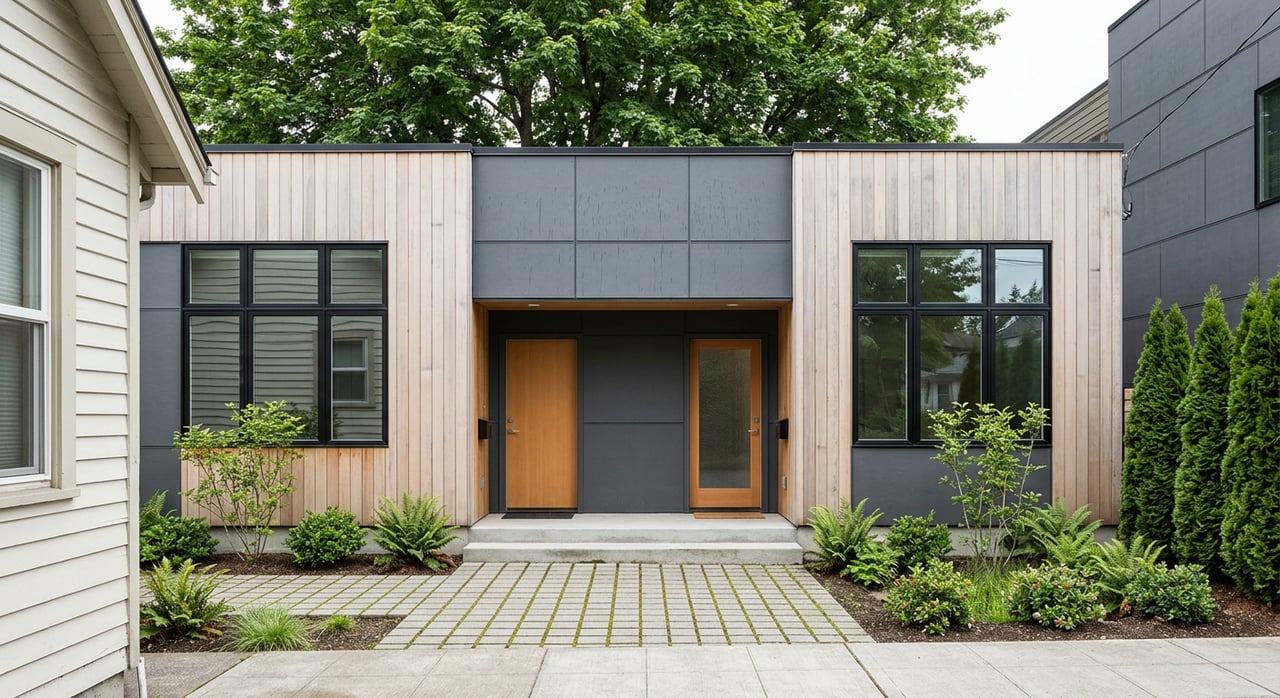
Much of Crown Hill retains single-family parceling, with many lots around 4,000 to 7,500 square feet and level topography. That pattern supports practical footprints for small infill. On a typical 5,000-square-foot lot, 3 to 4 fee-simple townhomes are common. A two-lot assembly of about 10,000 square feet can often support 6 to 8 townhomes or a compact 6 to 12 unit walk-up, depending on zoning and design. For a grounded view of the existing stock and townhome prevalence, see the King County assessor’s area report for Area 006.
Common product types
Local builders gravitate to:
- 3 to 4 unit for-sale townhome clusters
- 4 to 8 unit fee-simple townhomes or stacked flats
- Small rental walk-ups of about 5 to 12 units on assembled lots
- Renovate-and-hold plays on existing small multifamily where entitlement time or fees tip the scale
Underwrite with these numbers
Prices and exit comps
Neighborhood-level data shows Crown Hill’s median sale price around $865,000 as of February 2026, up roughly 6.1 percent year over year. Newly built or modern townhomes have recently closed from the mid to high $600,000s to above $1 million, depending on size, finish, and parking. For any specific site, pull micro-comps within a tight radius and match product, parking, and finish level.
Rents and rent premiums
ZIP 98117 sits in the low $2,000s on average rent, roughly around $2,200 as of February 2026. One-bedroom listings in the neighborhood commonly show in the $1,600 to $1,900 range, while two-bedrooms often land in the mid $2,000s based on age and finish. For new townhomes or boutique walk-ups with private entries or garages, model a premium scenario 5 to 10 percent above prevailing averages and a base case closer to neighborhood means. Always confirm with a property-level rent survey before finalizing the pro forma.
Costs, fees, and MHA
For a small multifamily or townhome build, establish a conservative hard-cost baseline. A state review of recent project budgets cites roughly $257 per square foot plus about $65,000 per unit for compact apartment product. Townhomes can land above or below that range depending on foundation type, finish package, and whether you need parking. Layer in entitlement, design, utility, and MHA.
MHA has real weight at small scales. Industry reporting has estimated average MHA impacts for townhome projects in the tens of thousands per unit, with some surveys citing around $32,000 per unit. If you are unfamiliar with these orders of magnitude, this low-rise multifamily policy analysis summarizes how fees stack up for small projects. The practical takeaway is simple: price MHA early. Compare on-site performance to an in-lieu payment and reflect any rounding effects.
Cap rates and financing guardrails
Market studies for Seattle and the broader Puget Sound in late 2024 and 2025 show stabilized small to mid multifamily trading around 5.0 percent on the low end, with many submarkets in the 5.5 to 6.0 percent range. Value-add and smaller 5 to 20 unit assets can price higher depending on condition and rent growth. Use current submarket comps to set your going-in and exit caps, and cross-check against lender DSCR thresholds. For context, review regional trends in Puget Sound multifamily cap rate reports.
Opportunities to capture
Transit and amenity tailwinds
Crown Hill benefits from frequent bus corridors that connect to downtown and the regional Link network. The city’s Route 40 bus-only lane upgrades aim to improve reliability, which helps marketing, lease-up, and long-term occupancy.
Lower parking costs
Where frequent transit applies, reduced parking minimums eliminate costly podium or underground solutions. That can be the difference between a marginal 3-unit penciling and a viable 4-unit, or between a 6-unit walk-up and a more profitable 8 to 10 unit plan. Confirm eligibility during feasibility to avoid overdesigning parking.
Risks to price in
MHA and entitlement friction
Smaller projects can feel MHA most because of unit rounding and per-square-foot calculations. Model both payment and on-site performance and test sensitivity to shifting tiers. Confirm your site’s mapping and likely fee band before you open escrow.
Construction costs and labor
Baseline per-square-foot figures help, but small projects carry trade premiums and variability by foundation, excavation, and finish level. Get fresh GC and structural input on basement vs slab, waterproofing, and any retaining or shoring early.
Interest rates and exit spreads
Cap rates stabilized in 2025 but have not returned to prior-cycle lows. Rate movements still affect DSCR and buyer underwriting. Build in conservative exit caps and consider contingency for a slower takeout.
Community process
Even with clear design guidance, neighborhood concerns about tree removal, parking, or scale can surface. Budget time and fees for potential mitigation, landscape redesign, and outreach.
Your Crown Hill feasibility checklist
Use this quick list during pre-offer diligence:
- Confirm zoning and the site’s MHA tier on the city’s Crown Hill maps and Official Land Use Map. Start here with the Crown Hill MHA mapping background.
- Pull parcel data for lot area, slopes, easements, and tree inventory. The Assessor’s Area 006 report gives helpful neighborhood context.
- Scope a foundation and parking approach with a GC and structural engineer. Use the state cost baseline as a starting point, then refine.
- Calculate MHA performance vs payment and note any rounding effects. Keep a working range per unit until you have final square footages.
- Build two rent scenarios: stabilized market and a 5 to 10 percent new-product premium, then stress test concessions.
- Set going-in and exit cap-rate assumptions using 5 to 10 recent north Seattle comps and cross-check against regional cap rate trends.
- Check SDCI plan review queues for LR and SDR projects to estimate carry during entitlement.
- Align your design with the Crown Hill Neighborhood Design Guidelines to reduce review friction.
What to watch next
- Any City Council or SDCI changes to MHA tiers or fee levels, which alter per-unit economics.
- Results from the Route 40 bus-only lane project that you can leverage in marketing.
- SDCI plan check times for LR and SDR projects, which affect interest and carry.
- Sale comps and OMs for 5 to 20 unit assets in the Ballard-Crown Hill corridor to refresh pricing and cap-rate assumptions.
How we help investors in Crown Hill
You want certainty around numbers and process. Our team pairs neighborhood-based search and parcel diligence with financing fluency and practical design input. We help you run the rent roll, compare MHA options, source GC guidance on foundations and parking, and set cap-rate and resale assumptions with relevant comps. If you opt for a for-sale exit, we also bring elevated, media-forward marketing to maximize visibility at completion.
Ready to evaluate a specific site or two-lot assembly? Connect with theodora cornelia to get a clear, local underwriting path and a strategy that fits your goals.
FAQs
What is MHA and how does it affect a small Crown Hill project?
- Seattle’s Mandatory Housing Affordability program requires either on-site affordable units or an in-lieu payment for new low-rise and multifamily projects in mapped areas, so you should price both options into your early pro forma.
How many townhomes can fit on a typical 5,000-square-foot Crown Hill lot?
- Many sites support 3 to 4 fee-simple townhomes, while two-lot assemblies around 10,000 square feet can often support 6 to 8 units, subject to zoning and design.
What sale prices should I assume for new Crown Hill townhomes?
- Recent closings have ranged from the mid to high $600,000s to above $1 million depending on size, finish, and parking, so match comps closely to your product.
What rents should I model for a Crown Hill 1-bedroom or 2-bedroom?
- As a starting point, ZIP 98117 averages around $2,200 per month, with many 1-bedrooms in the $1,600 to $1,900 range and 2-bedrooms in the mid $2,000s, then test a 5 to 10 percent premium for new product.
What construction cost baseline should I use for a small multifamily build?
- A conservative reference is around $257 per square foot plus about $65,000 per unit for compact apartment product, then refine with local GC bids and your finish level.
What cap rate should I target for a 6 to 12 unit north Seattle asset?
- Recent regional studies show stabilized small to mid multifamily around 5.0 to 6.0 percent, with value-add and smaller assets sometimes higher based on condition and rents.